
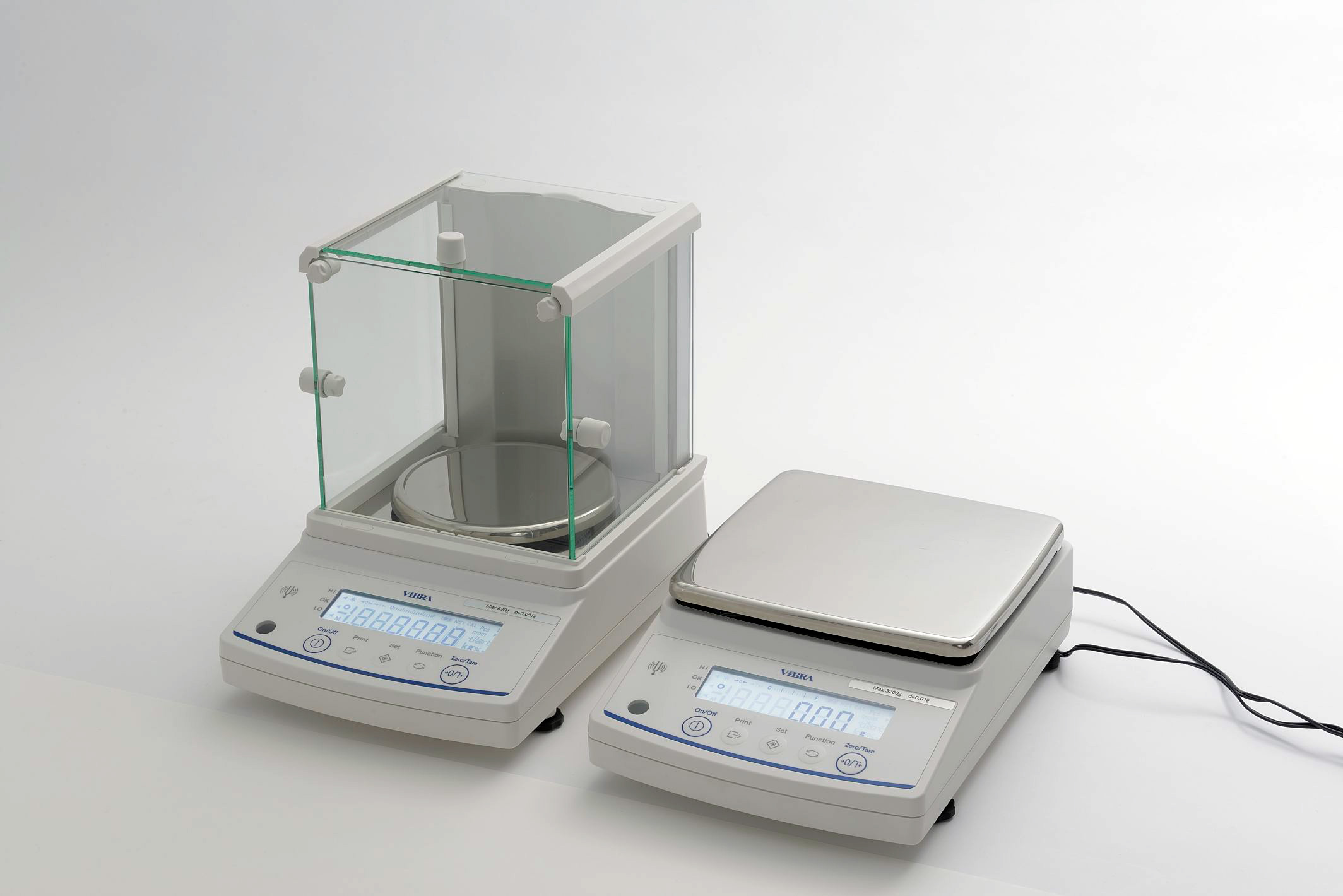
Features of the balances
- Weighing Sensor: These types of balances utilize a high-precision weighing sensor that can measure changes in the oscillation frequency of a long, narrow vibrator when a load is applied.
- Digital Output: The output from the sensor is converted into a digital readout, displayed on an easy-to-read screen.
- User-Friendly: The balances are designed for straightforward operation.
- Display: They feature a large, backlit LCD display. One model in the image appears to have a green Vacuum Fluorescent Display (VFD).
- Connectivity: These balances are equipped with an RS232C output for connecting to external devices such as computers or printers.
- Weighing Modes: Some models include functions like parts counting and percentage weighing. They may offer multiple measurement units for flexibility.
Distinguishing characteristics in the image
- Windshield: The balance on the left is equipped with a glass windshield, which helps shield the weighing pan from air currents and other environmental disturbances, crucial for accurate measurements, especially when dealing with smaller weights. The balance on the right lacks a windshield, suggesting it might be used for less sensitive applications or in environments where air disturbances are not a concern.
- Platform Size: The balance on the right has a larger weighing platform compared to the one on the left, indicating it might be suitable for weighing larger or bulkier samples.
- Capacity and Readability: Precision balances typically have capacities ranging from a few hundred grams to several kilograms, with readability often down to 0.001g. Balances with windshields often offer higher precision compared to those without.
These types of precision balances are used in a wide range of applications, including laboratory work, industrial settings, and retail, particularly in the jewelry industry.





 No products in the cart.
Reviews
There are no reviews yet.